

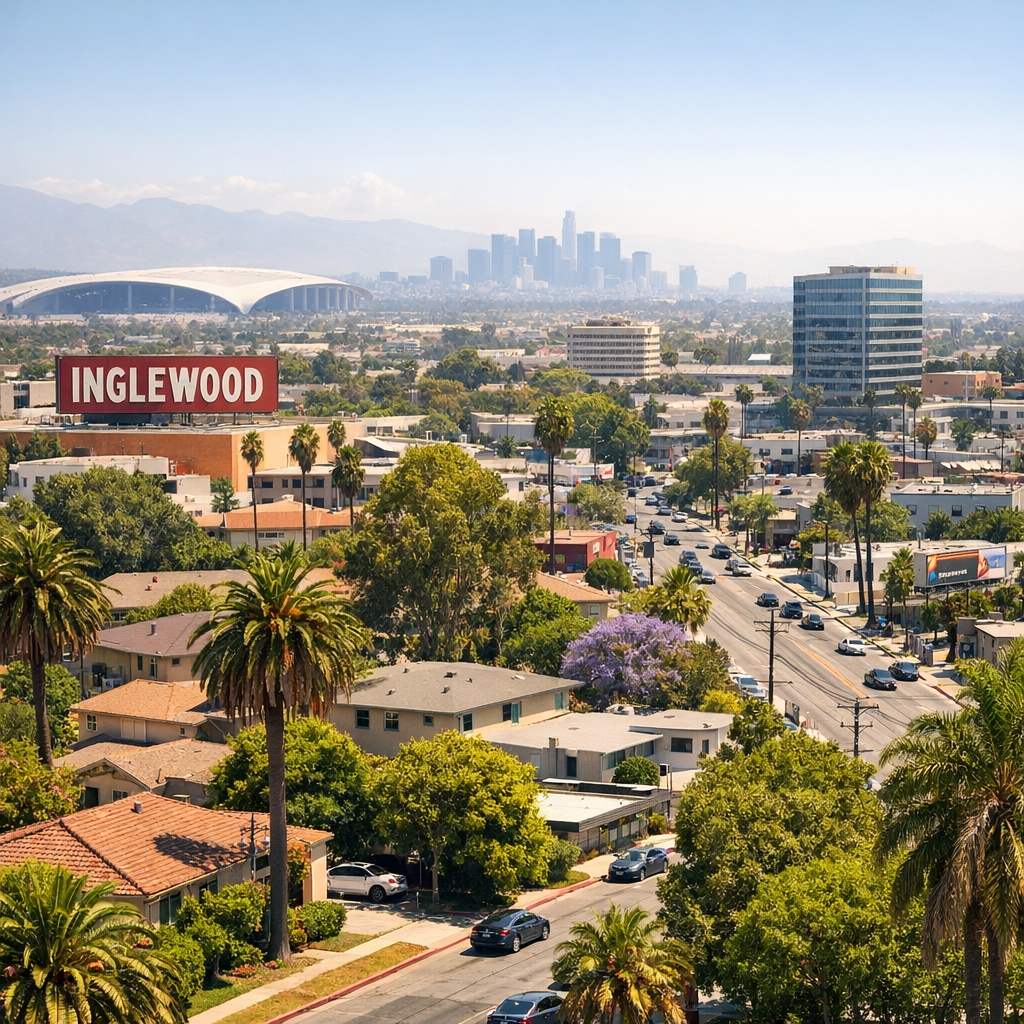
From the coastal breezes of winter to the heat soaking concrete in summer, Inglewood lives in a climate shaped by both natural rhythm and human influence. As our summers grow hotter and winters stay mild, understanding what’s changing matters for everyone—whether you’re walking the streets, tending your yard, or just stepping outside each morning.
Seasonal Weather Patterns in Inglewood
Inglewood is part of Southern California’s classic hot-summer Mediterranean climate: dry summers and wet winters. The rainy season usually runs from November through March, with February as the single wettest month. Summers, especially July through September, are largely dry, with very little measurable rainfall. Average daytime highs in summer reach the upper 70s to low 80s (°F), while winter nights often dip into the 40s or 50s. Snow? Almost unheard of.
Warming Trends & What’s Changing
Long-term data shows Inglewood has been warming steadily—on the order of about 0.2 °C per decade—raising average annual temperatures over recent decades. Warmer nights are becoming more common, and heat waves have been arriving earlier in the year, lasting longer. Even modest shifts like this can amplify discomfort, strain energy systems, and affect public health.
Urban Heat Island & Air Quality Challenges
The built environment—streets, concrete, dark roofs—holds heat. At night, when vegetation cools naturally, developed areas retain warmth. This “urban heat island” effect means some neighborhoods feel noticeably hotter after sunset. Add to that traffic, industry, and reduced airflow, and we get spikes in smog and air pollution, especially on hot days with stagnant air.
Managing Storms, Droughts, and Water Stress
Drought cycles remain a strong reality in southern California. Higher temperatures in summer increase evaporation and stress on water systems. Heavy winter rains help, but flashy storms can overrun drainage systems, especially in places where development has replaced natural absorption areas with concrete. Rain alone isn’t enough—it’s the timing, intensity, and ground readiness that make the difference.
What You Can Do Locally
- Plant more trees and support green spaces—they help shade and cool neighborhoods.
- Use lighter-colored, reflective materials for roofs and pavement where possible.
- Stay informed on air quality forecasts, especially during hot summer afternoons.
- Conserve water, especially during dry spells, and capture rain when it does fall.
Change is happening slowly, but already evident in the skies and on the ground. What we do today sets how comfortable Inglewood will be for our kids—and for our own evenings outside. Keeping cool, staying ready, and caring for the environment will carry us through.